
Software stocks have officially crashed out on public markets.
NEWS TO KNOW
Private markets… that’s another story now.
Best thing I read on X this past week…
📚 – 8 Concise Cold Call Openers
BEST FROM LAST WEEK
📝 – New Email Data: % Impact of Pitch Words on Reply Rate
💸 – Steal this email subject line for ghosting…
Every Buyer Has a Secret Agenda (And They’re Not Going to Tell You Unless You Ask)
The business case doesn’t close deals by itself. People do.
Your buyer isn’t losing sleep over “improving operational efficiency by 23%.”
They’re losing sleep because their boss asked them point-blank in their last 1:1 why the project is three months behind.
Or because they promised the board they’d fix this problem by Q4.
Or because they’re gunning for VP and this is their shot to prove they can drive transformation.
The business pain is just the vehicle. The personal motivation is the engine.
Why This Matters So Much
I’ve watched deals die with perfect ROI calculators and glowing business cases.
Then I’ve seen deals close with shakier numbers but where we truly understood what the buyer was trying to accomplish for themselves.
When you connect your solution to someone’s personal upside (promotion, credibility, avoiding a disaster, becoming the hero), you’re not just another vendor.

You’re a small piece in their success story.
The Framework: Business Pain to Personal Stake
Most discovery stops at level one. You need to go three levels deep.
Level 1: The Business Problem “We need to reduce customer churn” or “Our sales cycle is too long”
Level 2: The Business Impact “It’s costing us $2M annually” or “We’re missing our targets by 30%”
Level 3: The Personal Stake (this is where deals are won) “What does solving this mean for YOU?”
How to Actually Uncover It
You can’t just ask “so what’s in it for you?” too early.
You need permission and trust first. Here’s how to get there:
Build up to it progressively:
When you’re at the mid-way point in your sales cycle (this could be a few weeks or months), try this:
“We’ve spent a lot of time talking about the churn issue. I’m curious, why is THIS the problem you’re focused on right now versus everything else on your plate?”
Then, later in the conversation: “Silly question, but… why is this so important to you personally? Like, what changes for you if you actually fix this?”
Or my favorite: “If you solve this by end of Q2, what does that do for you?”
Watch for these personal motivation signals:
- “I told my CEO I’d have this handled…”
- “My team has been asking for better tools for two years…”
- “Honestly, I’m tired of us looking incompetent when…”
- “I need a win here…”
- “If we don’t fix this, I’m going to spend another year firefighting…
Real Examples
Example 1: The VP Who Wanted Credibility
Business problem: Outdated CRM causing data quality issues
Business impact: Sales team wasting 10 hours/week on manual data entry
But the real driver? This VP was new to the role (4 months in) and the CRM disaster was something her predecessor had ignored for years. She said: “I need to show I can actually get things done here and get the reps on my side, not just talk about it.”
That’s not in any ROI calculator. But THAT’S why she bought.

Example 2: The Director Avoiding Disaster
Business problem: Manual compliance process creating risk
Business impact: Could face regulatory fines
Real motivation came out when I asked what happens if they don’t solve it: “I’ll be the one explaining to the board why we got fined. And honestly, I can’t have that on my record right now.”
He wasn’t buying compliance software. He was buying career protection.
The Questions That Unlock This
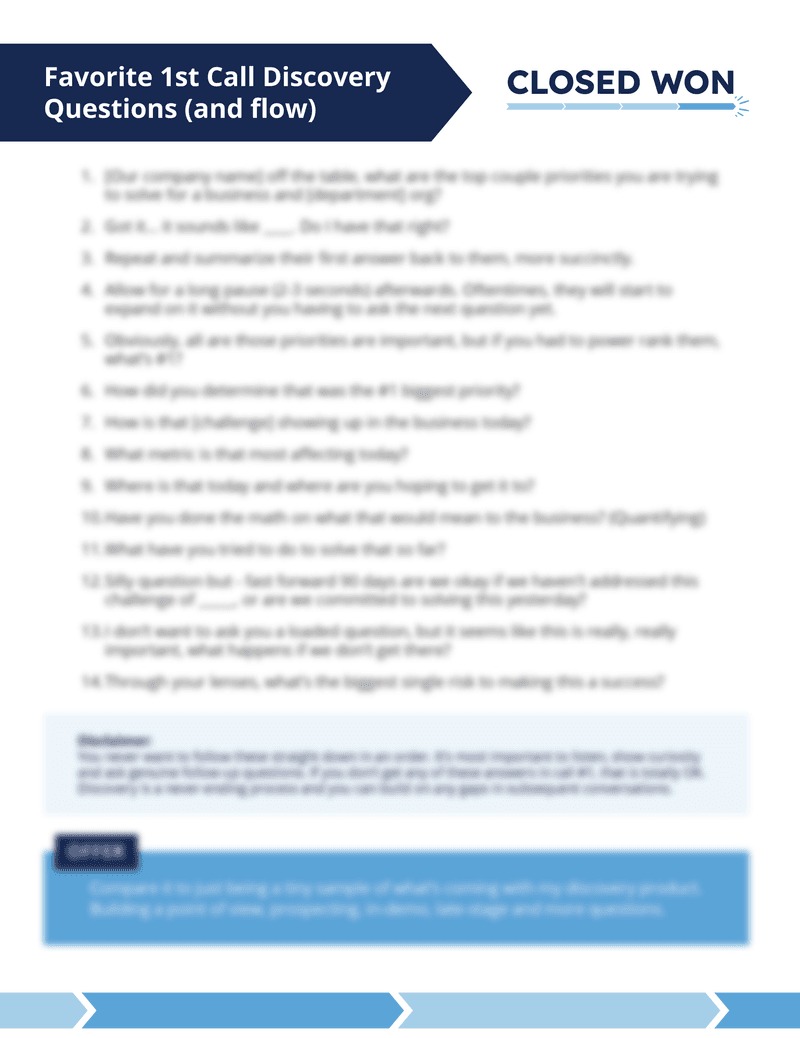
Try these in your next discovery call:
- “What’s riding on this for you?”
- “If you pull this off, what does that mean for your role here?”
- “What happens if this doesn’t get solved in the next 6 months… for you personally?”
- “Why are YOU the one driving this project?” (often reveals they volunteered or were voluntold)
- “What would a win here do for how your team sees you?”
One Warning
Don’t weaponize this.

If someone shares that they’re under pressure or need a win, your job is to genuinely help them succeed, not manipulate them into a deal that won’t actually work.
The whole point is to align your solution with their real goals so you BOTH win.
The Bottom Line
Every buyer is carrying around a personal agenda. They want the promotion. They want to stop looking bad. They want to prove they were the right hire. They want to finally stop firefighting and do strategic work.
Your product is just the tool that helps them get there.
That’s where deals get done.
I am completely overwhelmed right now.
New territory, new prospect accounts, new customers, new manager, new SE, new sales leader.
Due dates for account plans, tiering, pipe generation, etc.
If you feel this way too, one day at a time.
Not alone.