
SpaceX just acquired the rights to buy Cursor for $60 BN.
BEST FROM LAST WEEK
Two of the most disruptive companies on the planet are now under the same roof.
Elon’s betting that the future of rockets and software gets built the same way: faster, leaner, with AI doing the heavy lifting.
The race to Mars just got a code editor.
Or a $10 BN breakup fee…
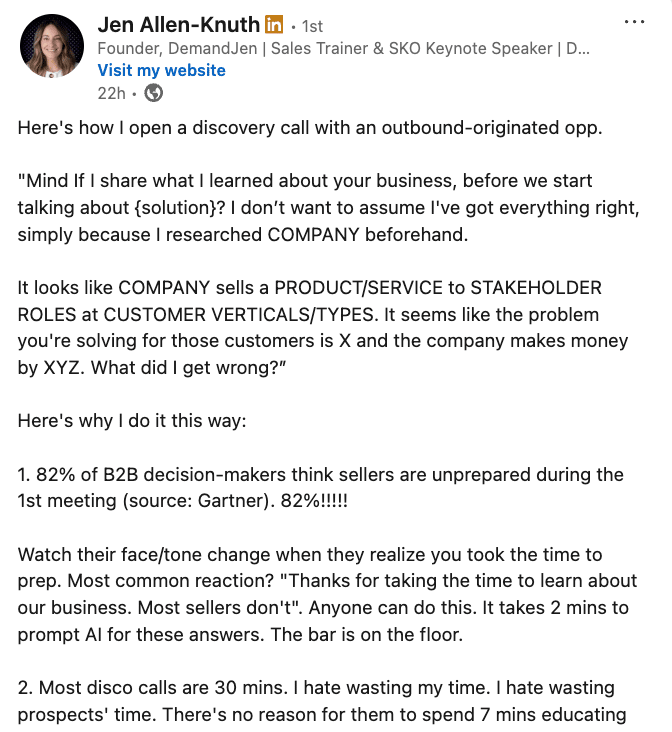
📚 – Opening a Discovery Call with an Outbound Opp – Best Way
BEST FROM LAST WEEK
The Next Generation of Enterprise AEs Won’t Look Like the Last
The classic enterprise AE has a pretty familiar profile.
20+ years in the industry. Deep rolodex. Knows how to work a room, build trust with a CFO, and navigate politics inside a 10,000-person organization.
They close big deals because people like them and trust them. That skill is real, and it matters.
But ask them to pull a pipeline report, keep their CRM updated, or use an AI tool to prep for a call? That’s where things get shaky.

Here’s the problem: that model is getting expensive to justify.
SaaS companies are under pressure to do more with less. Headcount is being scrutinized.
And as efficiency becomes the north star, companies are going to start asking a hard question: why do we need 10 enterprise AEs when 5 well-equipped ones could cover the same ground?
The next generation of enterprise AEs will need to bring both worlds together.
The Two Things the Next-Gen Enterprise AE Has to Nail
1. The human stuff (still non-negotiable)
Executive presence, relationship-building, navigating org complexity — none of that goes away. Buyers at the enterprise level still make decisions based on trust. A polished deck doesn’t close a $500K deal. A trusted advisor does.
The bar here isn’t lower. If anything, it’s higher, because you’ll be managing more accounts at once and need to make each executive feel like a priority.

2. The tech fluency (now table stakes)
This is where a lot of veteran AEs have a gap. The next-gen AE needs to be comfortable with:
- AI-assisted research and prep. Tools like Claude or ChatGPT can help you walk into a meeting knowing their recent earnings call, org changes, competitive landscape, and having a sharp point of view. Not doing this is just leaving insight on the table.
- Follow Up. Fast responses that are high quality, easily forward-able. Using ChatGPT Dictate and Custom GPTs or Claude Projects to get emails out the door in minutes. Not spending 30 minutes on an email there’s a chance never gets opened.
- Async and digital selling skills. Large enterprise deals involve 10+ stakeholders. You can’t get everyone on a call. The best AEs are building compelling async leave-behinds, using tools like deal rooms, short videos, one-pagers and more. If you know how to use AI, you can build these fast and make them polished.
A Simple Framework: The 2×2 to Know Where You Stand
Think about enterprise AEs on two axes:
- Relationship Strength (low to high)
- Tech Fluency (low to high)
The top-right box is where the money is going.
If you’re a veteran in the top-left, you have a real window right now to skill up before it closes.

The Bottom Line
Companies may soon expect half the headcount to produce the same revenue.
That’s not a scare tactic — it’s math that CFOs are already running.
The enterprise AEs who thrive won’t be the ones who resist this shift.
They’ll be the ones who leaned into it early, stacked both skill sets, and became genuinely hard to replace.
The relationship game isn’t dead. It just needs a technology layer now to cover a larger territory.