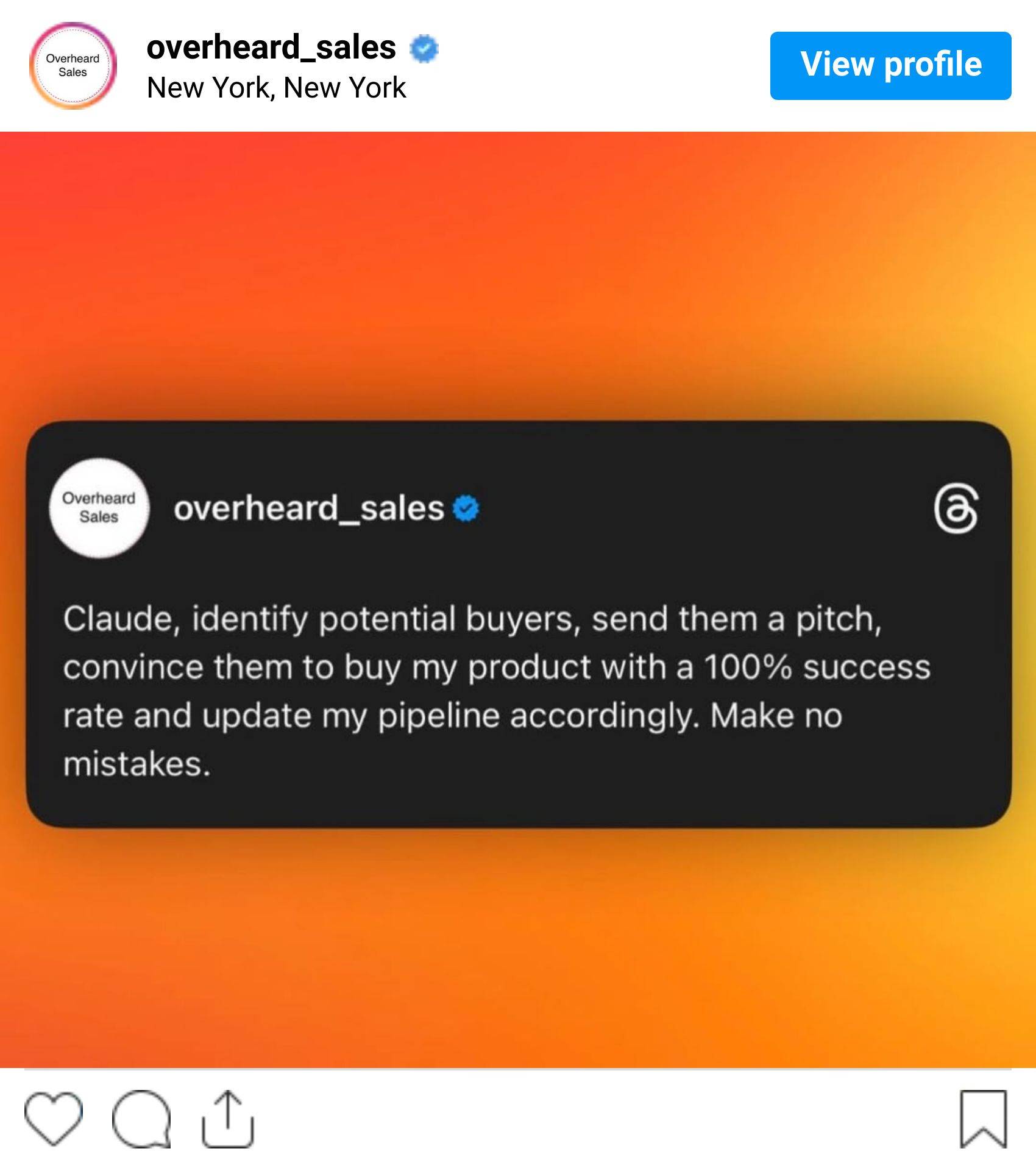

Atlassian is trying to follow Block’s layoff strategy.
NEWS TO KNOW
They are cutting 1,600 people and cited funneling money into AI.
Opinion: Any company underperforming who needs to reduce, will instead ‘spin’ it into a positive and cite AI. Only way the market will see it as a positive.
Their stock is down 68% in the last year. You be the judge.
Don’t believe every headline you read 🙂
📚 – ‘BTL’ Prospecting
BEST FROM LAST WEEK
📝 – Selling Simplicity in a Business Case
💸 – Recent, Favorite Discovery Question
3 Cold Calling ‘Tricks’
Most cold calling advice is either obvious (“be confident!”) or totally useless in real conversations.
But I’ve been testing some overlooked tactics that actually move the needle.
Here are three that changed everything for me.
1. The Two-Option Close (Not What You Think)
Stop asking “Would you be available for a quick call?” That’s a yes/no question, and “no” is always easier.
Instead, give them two specific options:
“We could hop on an intro call tomorrow at 2pm or Friday morning around 10am. What would work better for you?”
Why this works: Your brain automatically starts evaluating which option is better instead of whether to take the meeting at all. You’re not deciding IF anymore, you’re deciding WHEN.
The framework:
- Option A: Tomorrow + specific time
- Option B: 2-3 days out + specific time
- Always phrase as “What works better for you?”
Real example: “Based on what you mentioned about Q4 planning, I think a 30 min intro conversation could help you understand what we have to offer to know if it’s even worth including. We could jump on a call tomorrow at 3pm or Thursday morning around 10am. What works better for you?”

2. End With the Ask (Then Shut Up)
This one’s simple but most people mess it up.
Make your meeting request the very last thing you say on the call.
Then stop talking.
What NOT to do: “So would you be open to a quick 15-minute call next week? I think it could really help with your inventory management issues, and I’ve worked with companies just like yours before, and…”
What to do instead: “Based on everything you’ve shared, I think a 15-minute conversation next week could help you avoid those inventory headaches. I could do Tuesday at 2pm or Thursday morning around 10am. What works better?”
Then zip it. Let them respond.
Why this works: Every word after your ask gives them time to build objections in their head.
You want their immediate reaction, not their carefully constructed “no.”

3. Reverse-Question Technique for Objections
When someone throws an objection at you, your instinct is to handle it immediately.
It doesn’t work because their guard goes up and they get defensive.
Instead, ask another question first.
This does three things:
- Shows you’re actually listening (not just waiting to pitch)
- Gives you crucial context about what’s really behind the objection
- Often makes them talk themselves into why they DO need help
The flow:
- They object
- You ask a reverse question
- They explain more
- You reframe and handle the real issue
Example conversation:
Them: “We’re not really looking to change vendors right now.”
You (don’t do this): “I totally understand, but we’re actually different because…”
You (do this): “Sounds like you’re in a great position, as is. What’s working so well with your current setup?”
Them: “Well, it’s fine for most things, but we’ve been having some issues with their reporting lately…”
Now you know the real problem isn’t that they don’t want change.
They just need a reason that’s bigger than the hassle of switching.
Much easier conversation.

More reverse questions for common objections:
- “We don’t have budget” → “Most companies do not… when do you all go through budgeting?”
- “We’re too busy right now” → “What’s keeping you busiest these days?”
- “We’re happy with our current solution” → “What do you like most about it?”
The magic happens when you shut up and let them talk.
They’ll usually reveal the real issue, which is often much easier to address than their surface-level objection.
Final Thoughts
Most cold calling fails because we’re fighting human psychology instead of working with it.
These three tactics flip that around.
Hit reply and let me know which one you try first.
I read every response.